Wedding Ceremony Order: Who Walks When and What Comes Next
The order of a wedding ceremony follows a familiar structure. The processional opens it, the couple exchanges vows and rings in the middle, and the recessional sends everyone off to celebrate. Knowing that structure early makes the rest of your planning easier. This guide walks through the full wedding ceremony order, who walks when, where everyone stands, how the order shifts for different ceremony types, and how it all comes together at White Oaks Farm, a Myrtle Beach wedding venue built around the water with more than one place to say your vows.
What is the order of a wedding ceremony?
A wedding ceremony runs in a set sequence. Most ceremonies follow the same core order whether they last ten minutes or forty. Here is the standard flow from start to finish.
- The processional, when the wedding party and the couple enter
- The opening words from the officiant
- Readings, songs, or a short address
- The vows
- The ring exchange
- An optional unity moment or tradition
- The pronouncement
- The first kiss
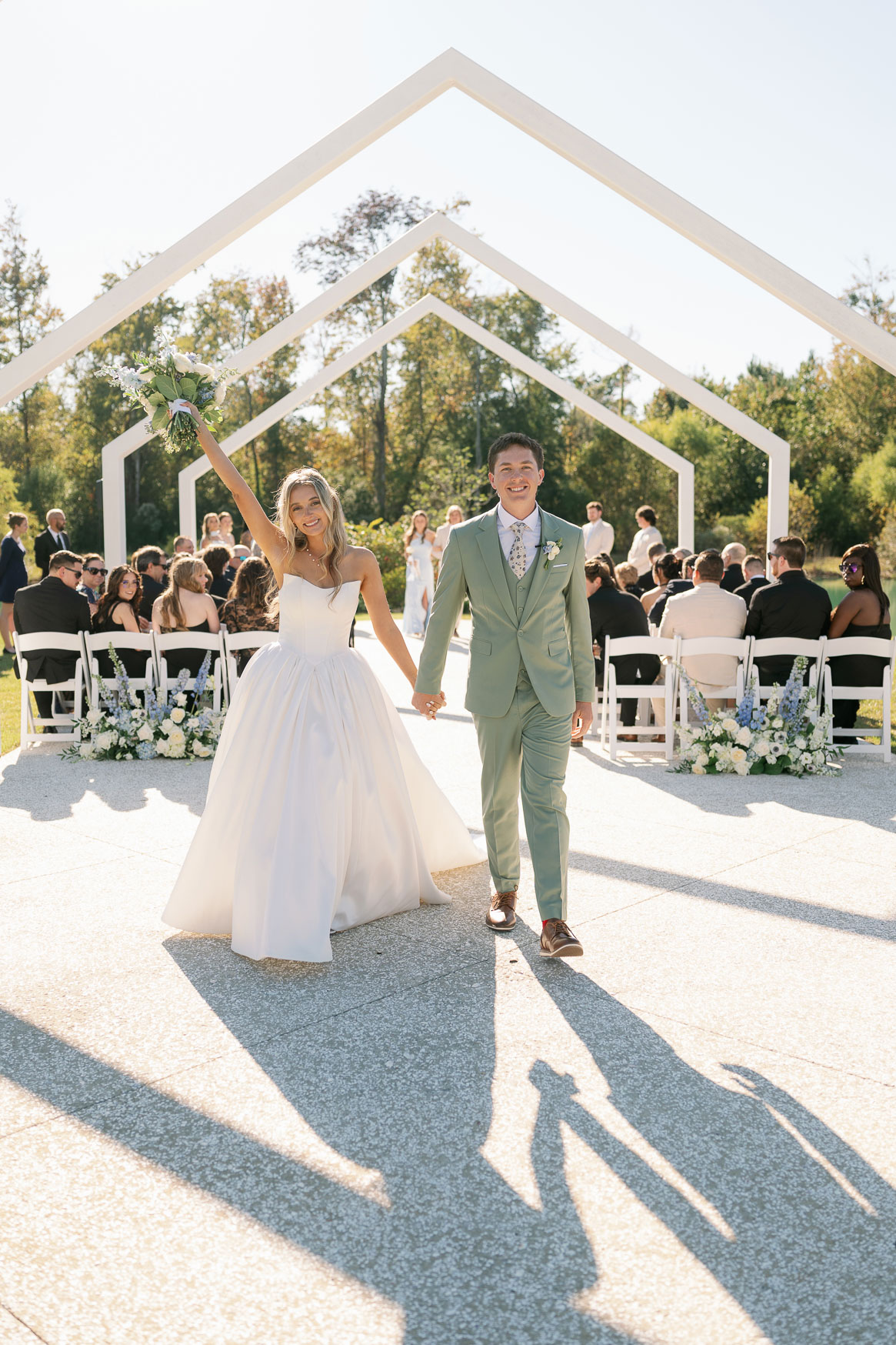
- The recessional, when everyone exits
Think of this as a framework rather than a rule. Couples add, remove, and reorder these parts to fit their family, faith, and style. The setting shapes it too, which is where your venue comes in.
Where does the ceremony happen at White Oaks Farm?
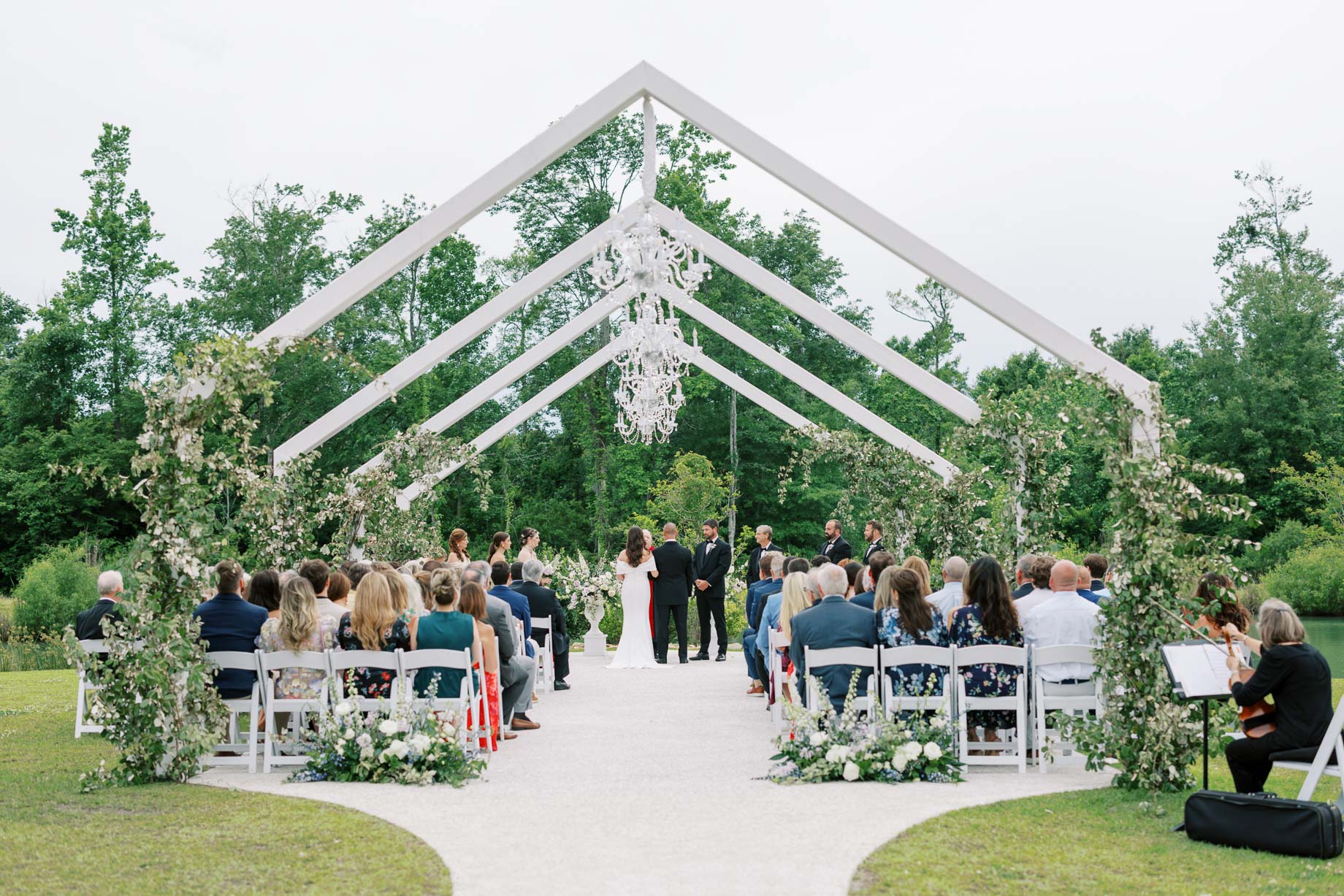
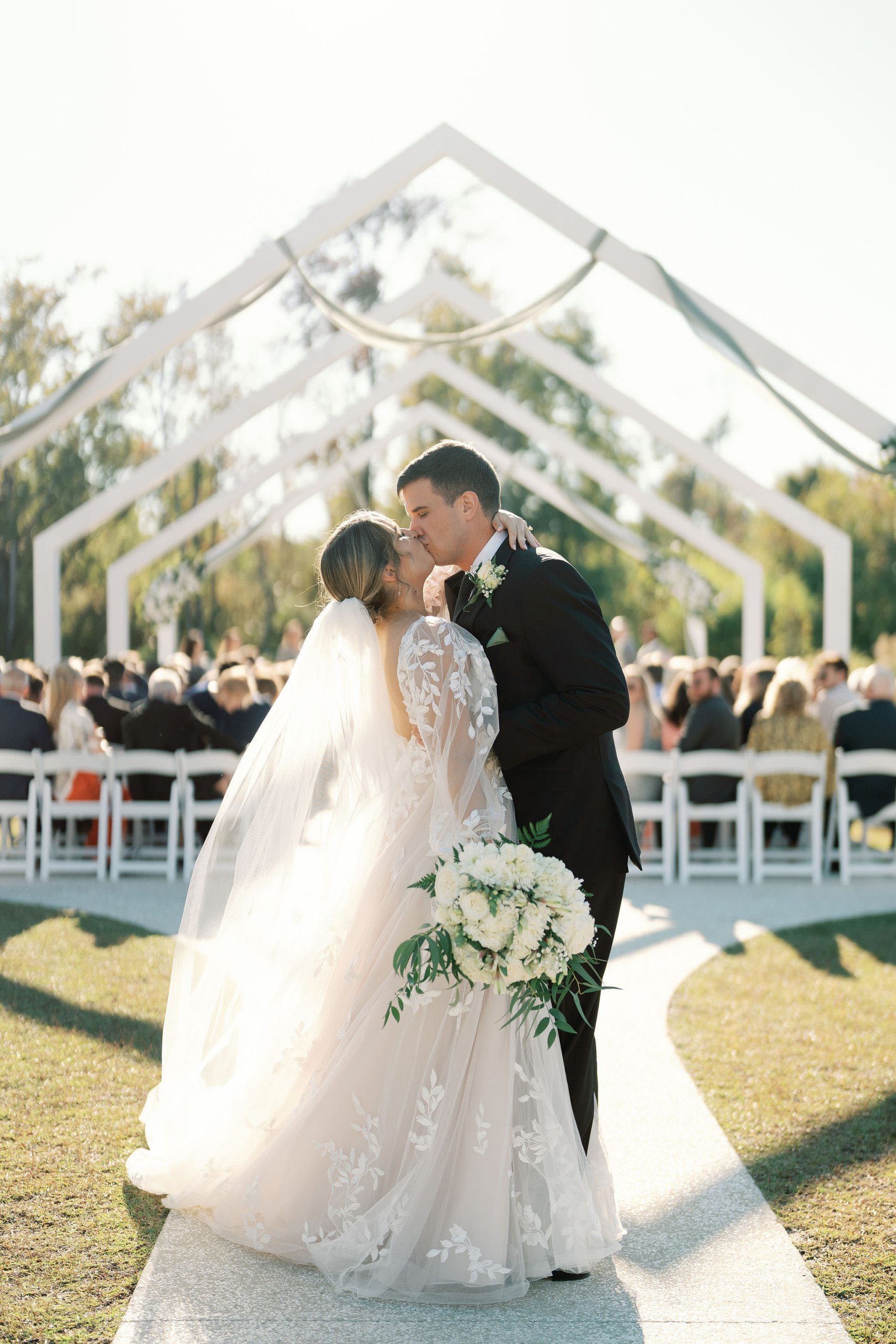
White Oaks Farm gives you more than one place to say your vows, and each one changes how your ceremony feels. The main ceremony lawn sits right beside the pond. A run of tall white geometric arbors frames the aisle and draws every eye down to the couple. You can hang a crystal chandelier from the peak, drape the frame in soft fabric, or line it with florals so the structure carries your whole palette. White chairs fan out from a wide aisle, urns of flowers mark the rows, and the water sits just past the arbor as your backdrop.
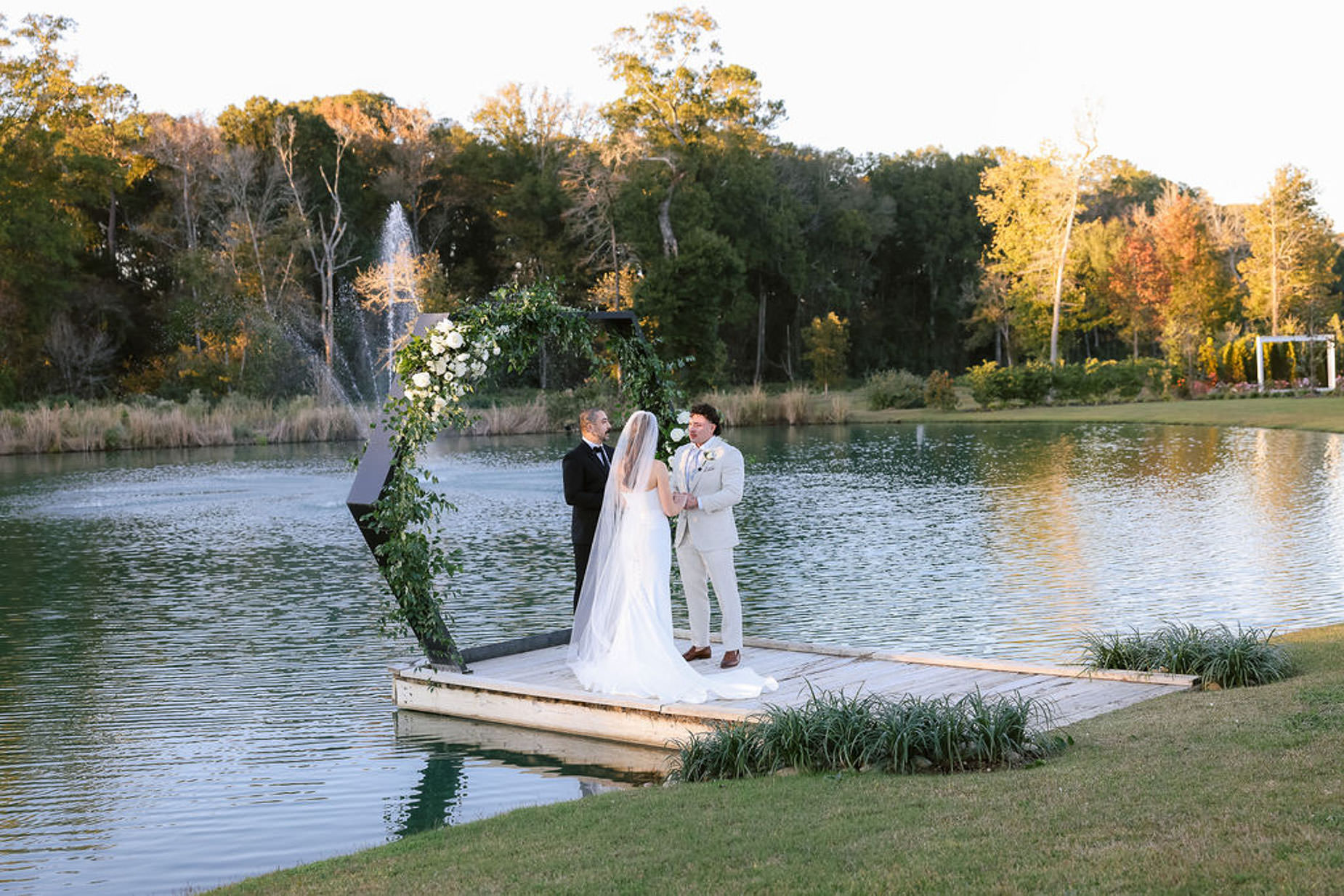
A short walk from the lawn, a wooden dock reaches out over the pond. Couples use it for a ceremony surrounded by water on three sides, or as the spot for a round floral arch that turns the pond into a mirror behind them. String lights cross the grounds, landscaped paths wind between the gardens and benches, and a white farmhouse building anchors the property with a covered porch for guests to gather. The whole setting photographs beautifully from spring green through autumn color, so the season you choose becomes part of the look.
How do you choose between the ceremony spaces?
Start with the feeling you want, then match it to the space. The lawn under the white arbors is the open, classic choice, with room for a full guest list and the pond behind you. The dock over the water is the dramatic one, best when you want the pond as your frame and a setting that feels set apart. An indoor space keeps the day on track if the weather turns hot or wet, with controlled light and shelter for every guest.
You do not have to pick just one. Many couples say their vows on the lawn, slip to the dock for portraits at golden hour, and move indoors for the reception. The property flows from one to the next, so your ceremony order can carry straight into the rest of the day without a long gap.
Who walks in the processional, and in what order?
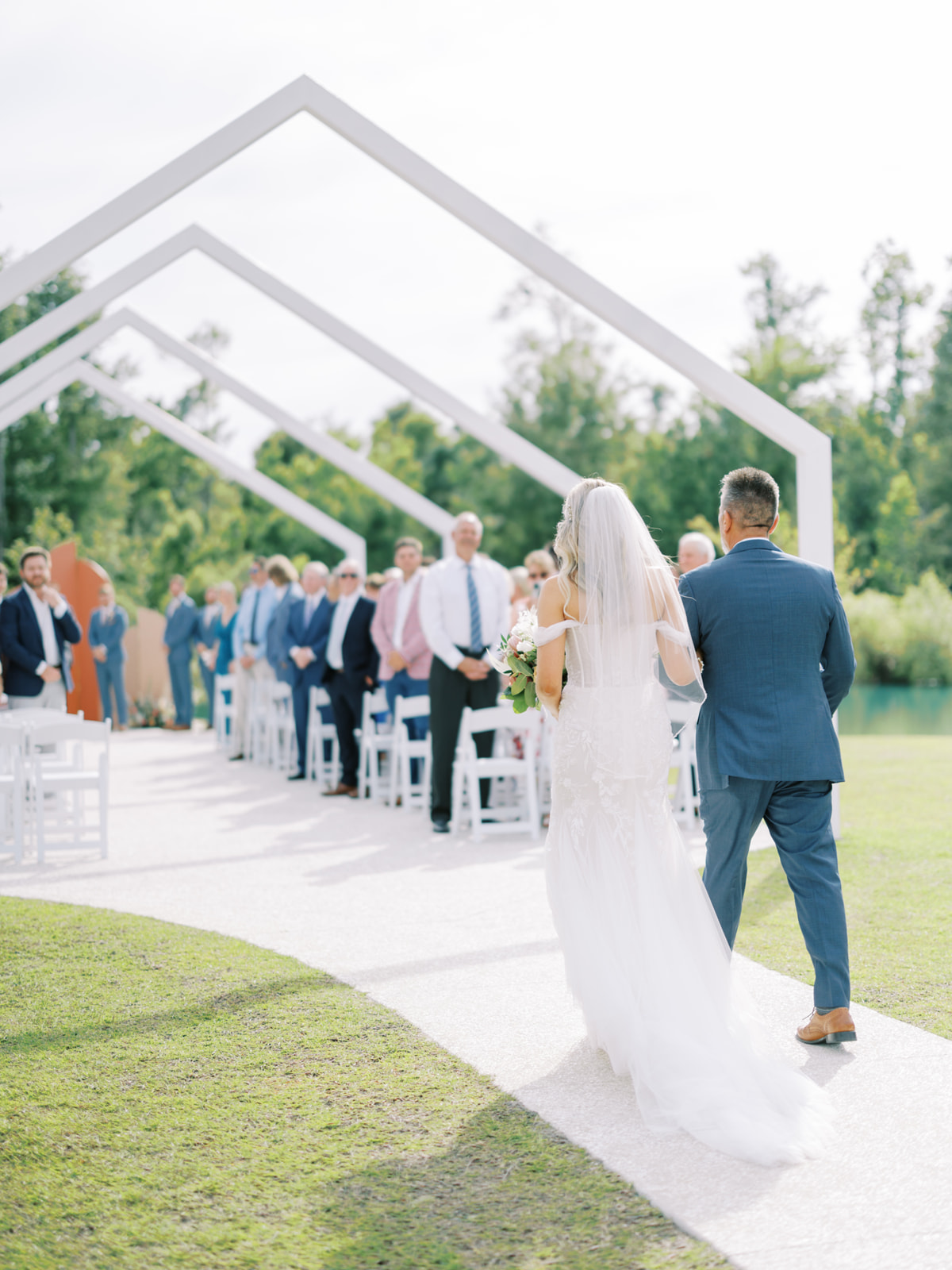
The processional is the entrance. People walk in from the back to the front in a traditional order, building up to the couple. On the ceremony lawn, that walk carries you down the aisle toward the white arbor and the water beyond it. A common sequence looks like this.
- The officiant takes their place at the front
- Grandparents are seated
- Parents are seated
- The wedding party walks in, often in pairs
- The honor attendants follow
- The flower kids and ring bearer come next
- The person or people getting married enter last, often escorted
Many couples adjust this freely. Couples of any gender can choose who enters last, and blended families often include stepparents, siblings, or close friends in the walk. The order should reflect the people who matter most to you.
Where does the wedding party stand during the ceremony?
The wedding party stands on either side of the couple, facing the guests. The officiant stands at the center, with the couple directly in front of them and the arbor and water framing them from behind. Honor attendants stand closest to each partner, and the rest of the party lines up outward from there. Flower kids and ring bearers usually sit with family once they reach the front so they are not standing for the whole ceremony.
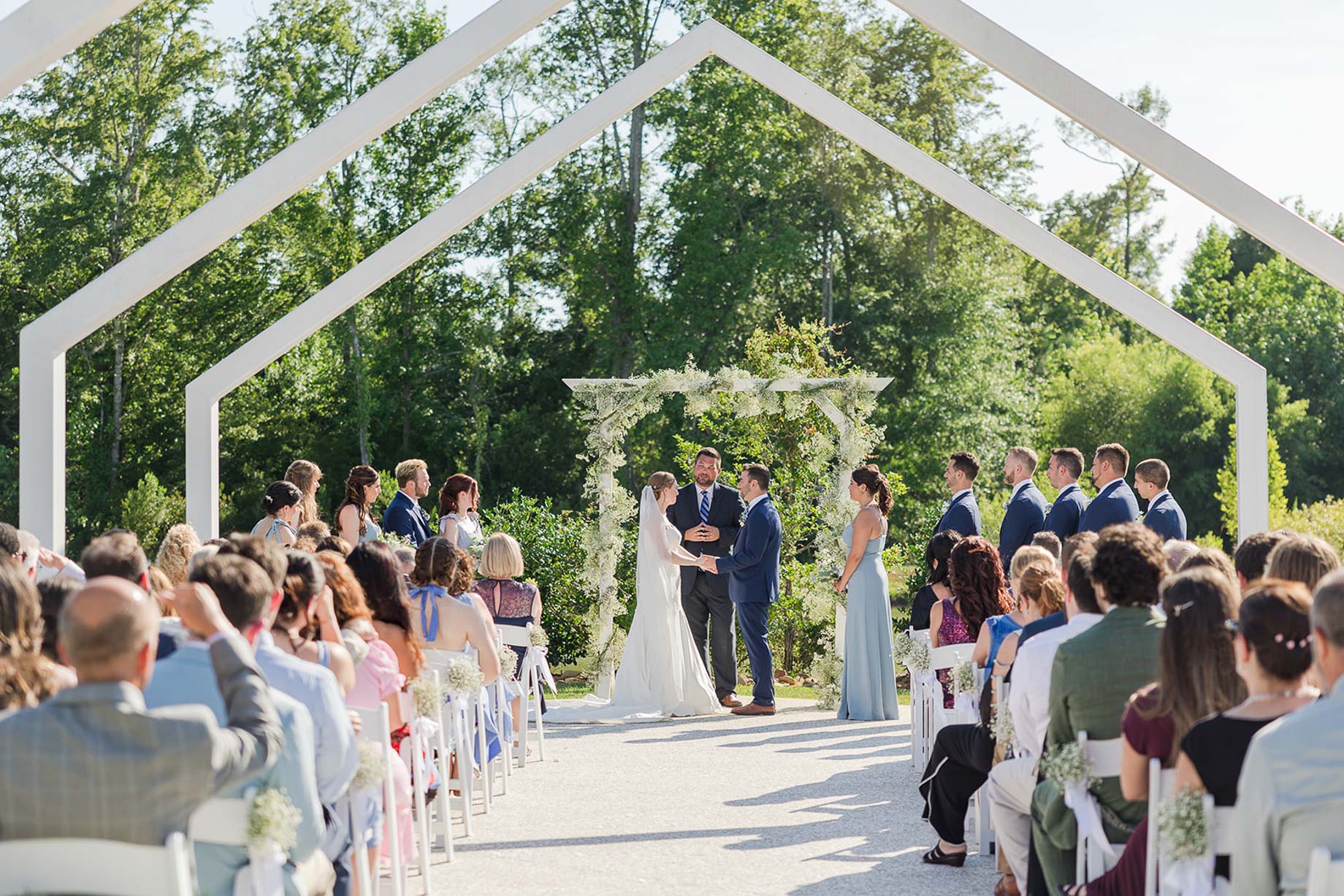
What happens during the ceremony itself?
Once everyone is in place, the officiant opens with a welcome to the guests. From there the ceremony moves through its main moments.
- Opening words. The officiant welcomes guests and often shares a few words about the couple.
- Readings or music. Friends or family may read a passage, a poem, or perform a song.
- The vows. The couple exchanges promises, either traditional wording or something they wrote themselves.
- The ring exchange. Each partner places a ring on the other as a symbol of the vows.
- A unity moment. An optional ritual such as a candle lighting, a sand ceremony, or handfasting.
- The pronouncement. The officiant declares the couple married.
- The first kiss. The couple shares their first kiss as newlyweds.
How does the order change for different ceremony types?
The core order stays the same, but the length and the moments inside it shift with the type of ceremony you choose.
- Civil or secular. The shortest option, often 10 to 15 minutes. A welcome, the vows, the rings, and the pronouncement, with little added around them.
- Religious. Usually longer, often 30 to 60 minutes, with prayers, scripture or readings, and rituals specific to the faith woven through the standard flow.
- Cultural or interfaith. Built around the traditions that carry your heritage, such as a canopy, a blessing, a tea ceremony, or a ritual that joins two backgrounds into one service.
Whatever you choose, the processional still opens the ceremony and the recessional still closes it. The middle is where your beliefs and background shape the day.
What is the recessional order?
The recessional is the exit, and it moves faster than the processional. The couple leads the way, followed by the rest of the party in reverse of how they entered.
- The newlyweds exit first
- The flower kids and ring bearer follow
- The honor attendants go next
- The rest of the wedding party follows in pairs
- The officiant exits
- Parents and grandparents follow
- Guests are dismissed row by row, usually starting from the front
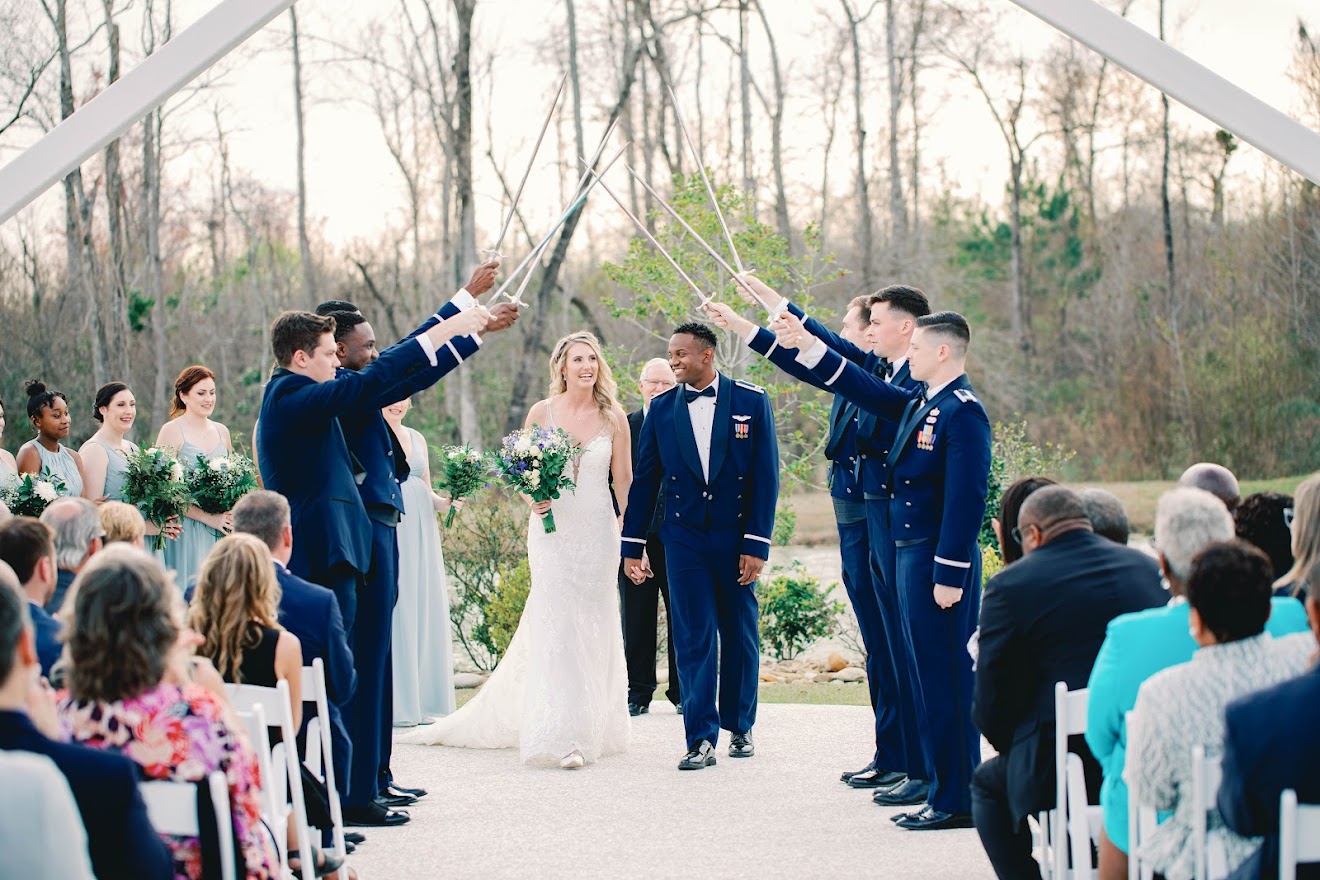
What happens right after the ceremony?
The recessional flows straight into the celebration. As guests leave the ceremony, they move to cocktail hour, often on the grounds or the covered porch where string lights carry the evening. This is the window when the couple slips away for portraits, and the dock over the water is the spot most choose for that quiet break together. From there the day moves into the reception, so the ceremony order sets the pace for everything that follows.
How long does a wedding ceremony last?
Most wedding ceremonies last 20 to 30 minutes. A short civil ceremony can run 10 to 15 minutes, while many religious and cultural ceremonies run 45 minutes to over an hour. The length depends on how many readings, rituals, and traditions you include. When you plan your timeline, give the ceremony a little more room than you expect so nothing feels rushed, and leave time for the walk to the water for portraits after.
How do you turn the order into a timeline?
The order tells you what happens. The timeline tells you when. A simple ceremony schedule looks like this.
- Guests arrive and are seated in the 15 to 20 minutes before the start
- The processional runs about 5 minutes
- The main ceremony, from opening words to first kiss, runs 15 to 25 minutes
- The recessional takes about 5 minutes
- Guests move to cocktail hour while the couple steps away for portraits
Build in a buffer on either side. Weddings rarely start on the exact minute, and a few extra minutes keep the day calm instead of rushed.
What wedding ceremony traditions can you include?
Traditions give the ceremony meaning and make it feel personal. You can include as many or as few as you like. Popular options include:
- Unity ceremonies such as candle lighting, a sand blend, a wine box, or handfasting
- Readings from family or friends, chosen to reflect your relationship
- A ring warming, where guests hold the rings and share a silent wish for the couple
- Cultural and family rituals that carry your heritage into the day
- A moment of remembrance for loved ones who could not be there
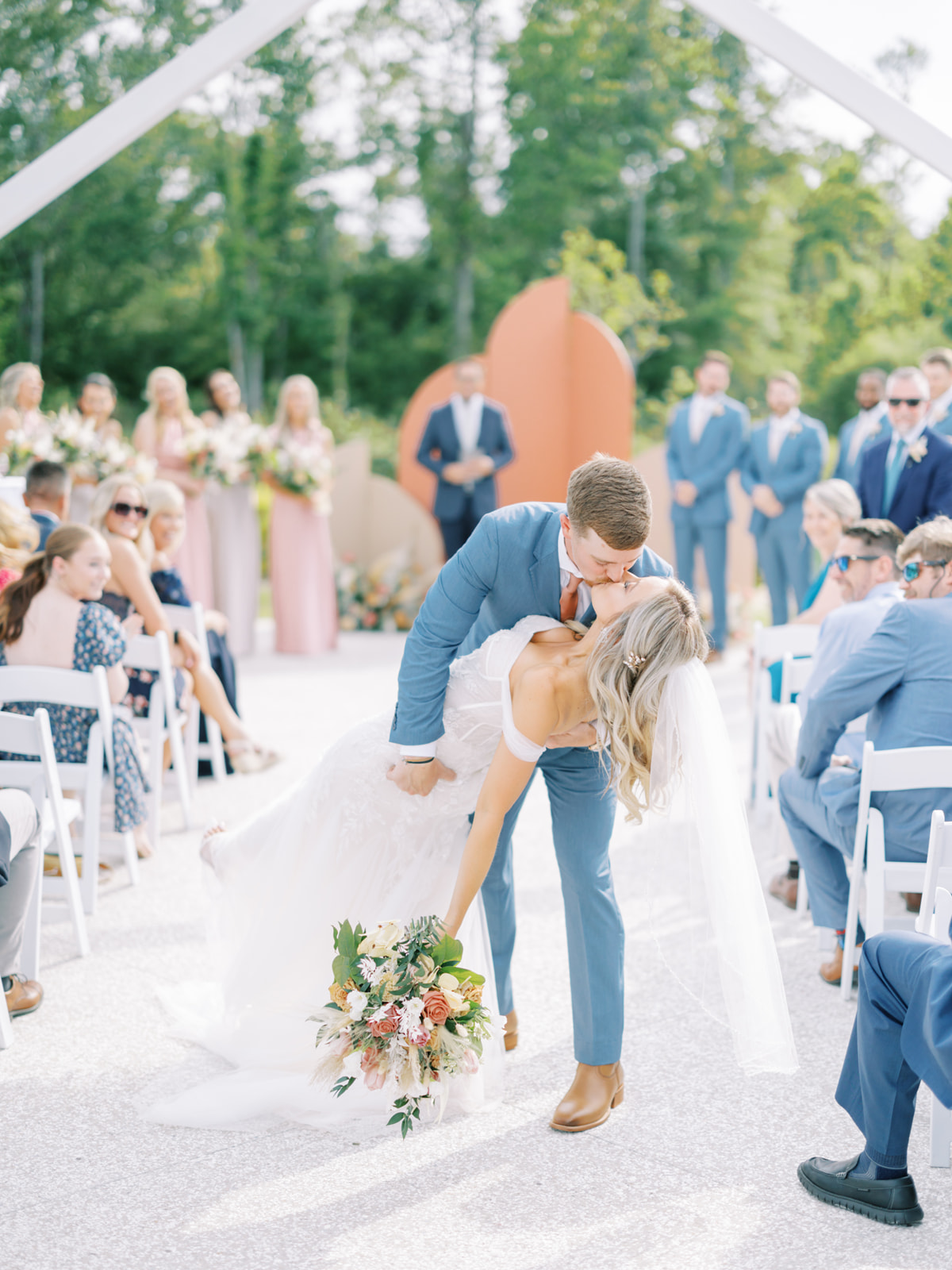
How do you personalize your ceremony order?
Start with the standard order, then shape it around your people, your beliefs, and your setting. Write your own vows if the traditional wording does not feel like you. Add a ritual that reflects your background. Change who walks in and who stands beside you. And choose your spot, whether that is the arbor lawn by the water or the dock over the pond, so the front of the ceremony looks like your life. The structure keeps the day moving, and your choices inside it make the ceremony yours.
Frequently Asked Questions About Wedding Ceremony Order
What is the traditional order of a wedding ceremony?
A traditional wedding ceremony runs in this order: the processional, opening words, readings or music, the vows, the ring exchange, an optional unity moment, the pronouncement, the first kiss, and the recessional. Most ceremonies follow this sequence with small changes to fit the couple.
Who walks down the aisle first?
The officiant takes their place first, followed by seated grandparents and parents. The wedding party walks next, then the honor attendants, then the flower kids and ring bearer. The person or people getting married enter last.
Where can you have a ceremony at White Oaks Farm?
White Oaks Farm offers several ceremony settings. The main lawn sits beside the pond, framed by tall white arbors, and a wooden dock reaches over the water for couples who want the pond as their backdrop. An indoor space is available as well, so weather never decides your day for you.
Can you get married by the water?
Yes. At White Oaks Farm the ceremony lawn faces the pond, and a dock reaches out over the water for couples who want to say their vows surrounded by it. The pond also makes one of the best backdrops on the property for portraits after the ceremony.
How long should a wedding ceremony be?
Plan for 20 to 30 minutes for a typical ceremony. A civil ceremony can be as short as 10 to 15 minutes, and religious or cultural ceremonies often run 45 minutes or more depending on the traditions included.
Can you change the order of a wedding ceremony?
Yes. The order is a framework, not a fixed rule. Couples regularly adjust who walks in, add or remove rituals, and reorder the readings and vows to match their family, faith, and style.
Where your ceremony comes to life
Once you know how your ceremony will flow, the next decision is where it happens. The setting shapes the processional, the light on your vows, and every photo you keep from the day. See our Myrtle Beach wedding venue to picture where your ceremony could take place.